This is the most
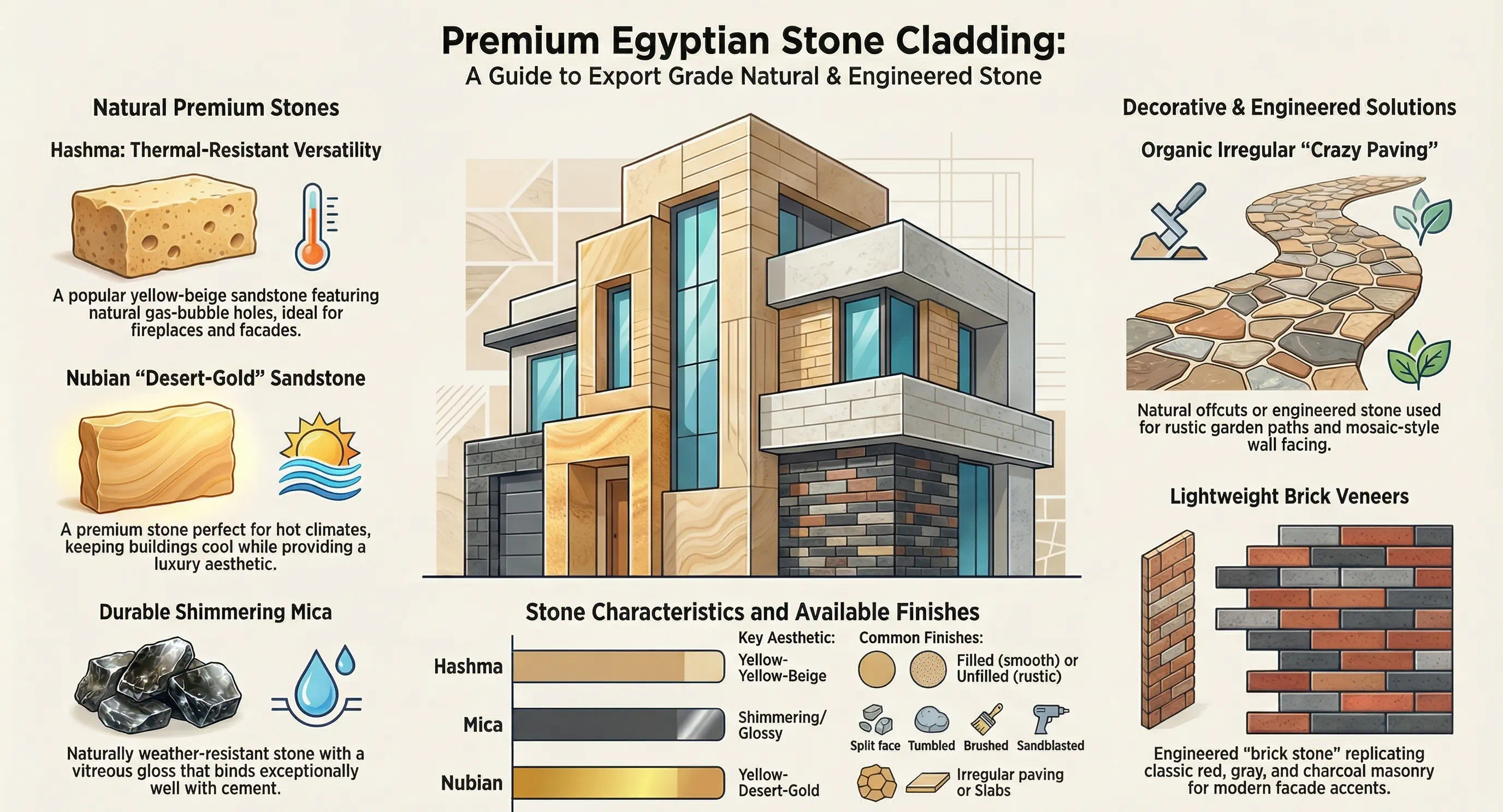
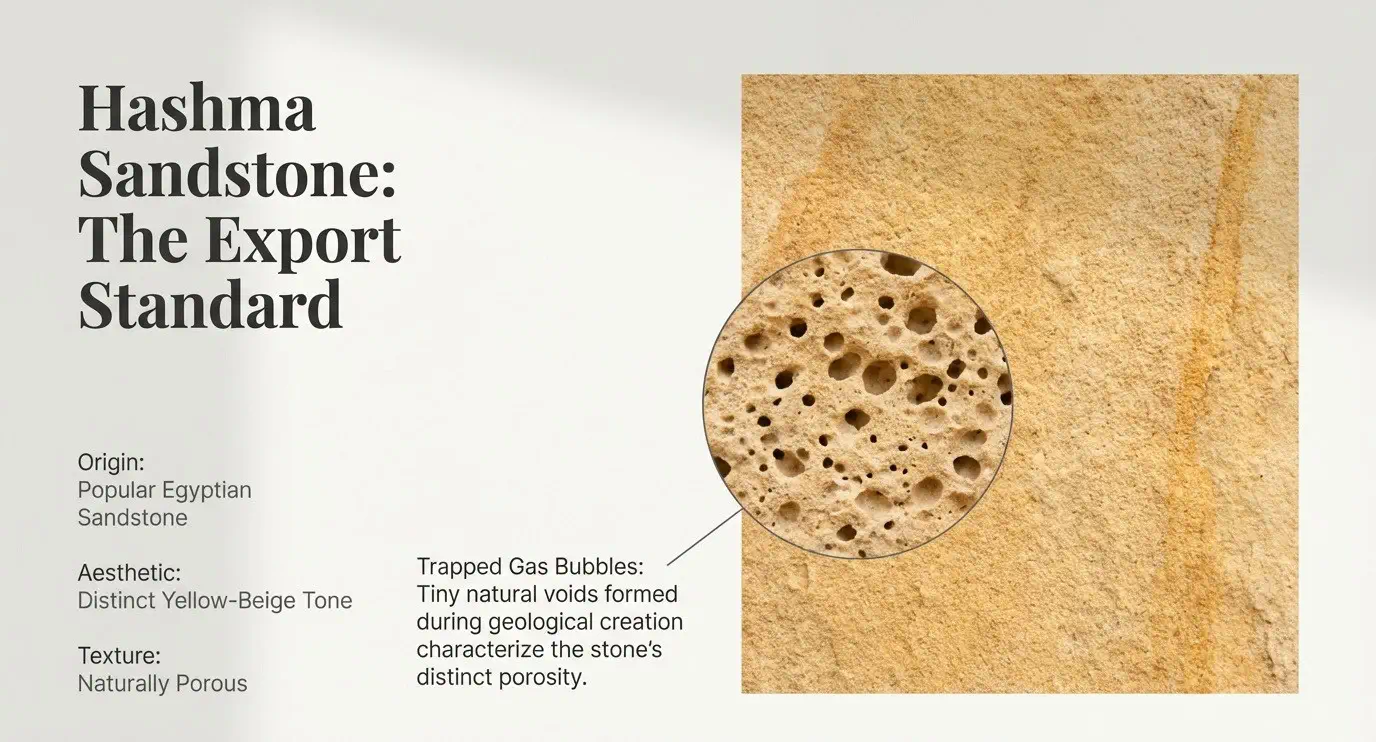
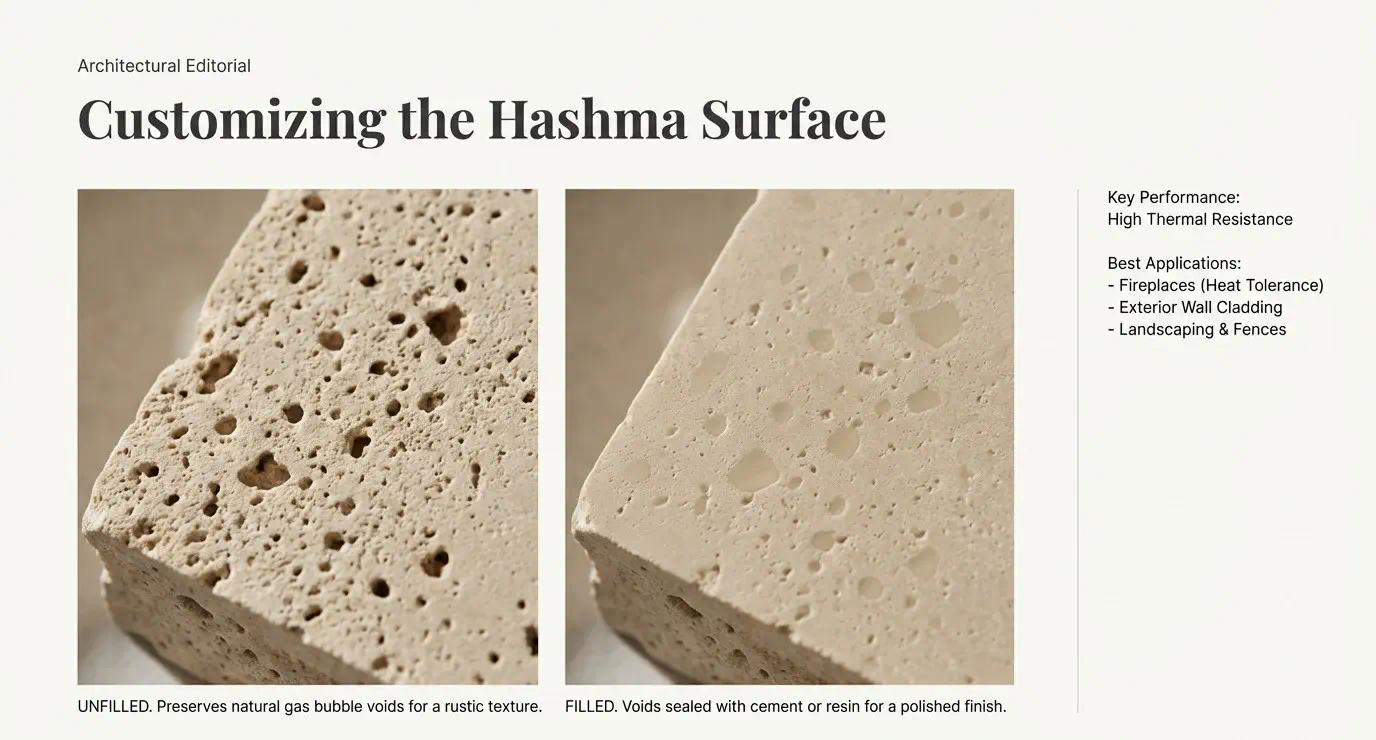
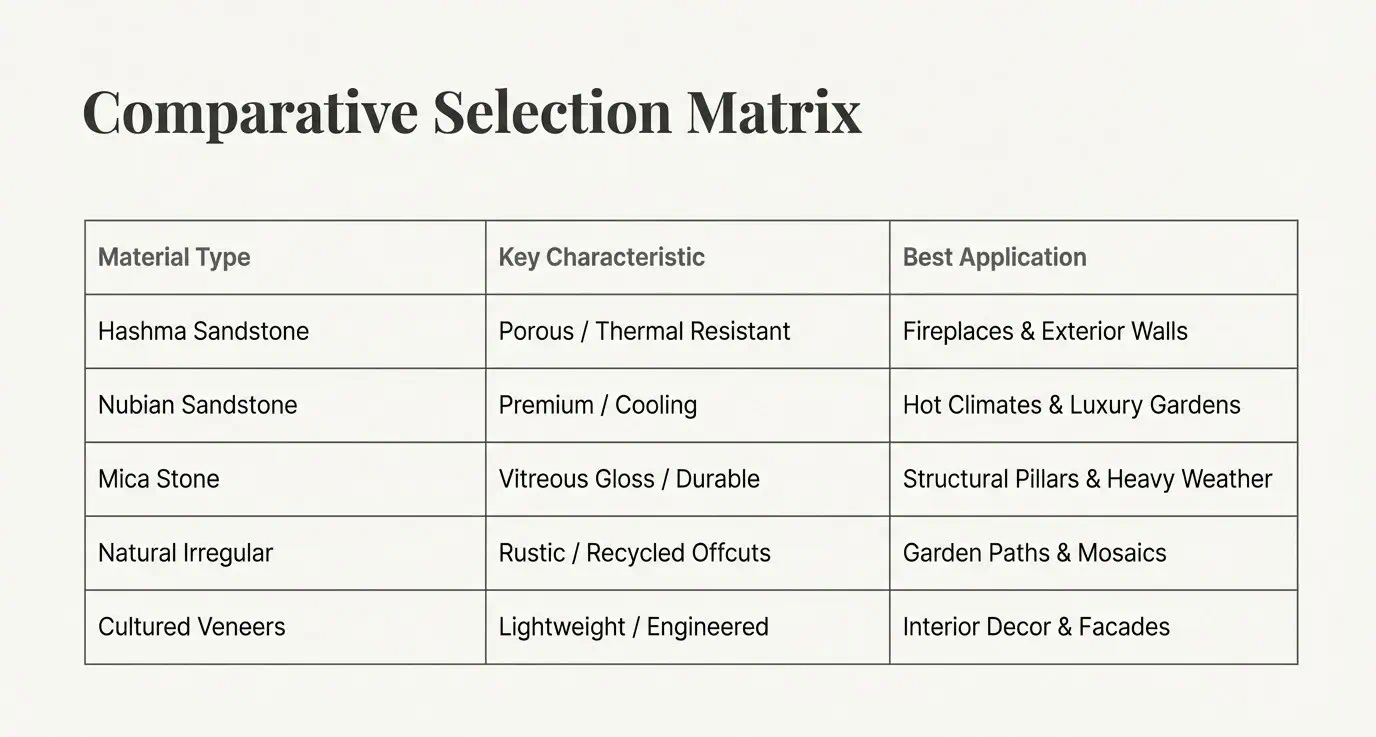
popular Egyptian sandstone for export. It is a distinct yellow-beige stone
characterized by tiny natural holes (caused by trapped gas bubbles during its
formation).
Filled vs. Unfilled: The holes can be left
natural (unfilled) for a rustic look or filled with cement/resin for a smoother
finish.
Applications: Highly
thermal-resistant, making it a top choice for fireplaces. It is also widely
used for exterior wall cladding, landscaping, and fences.
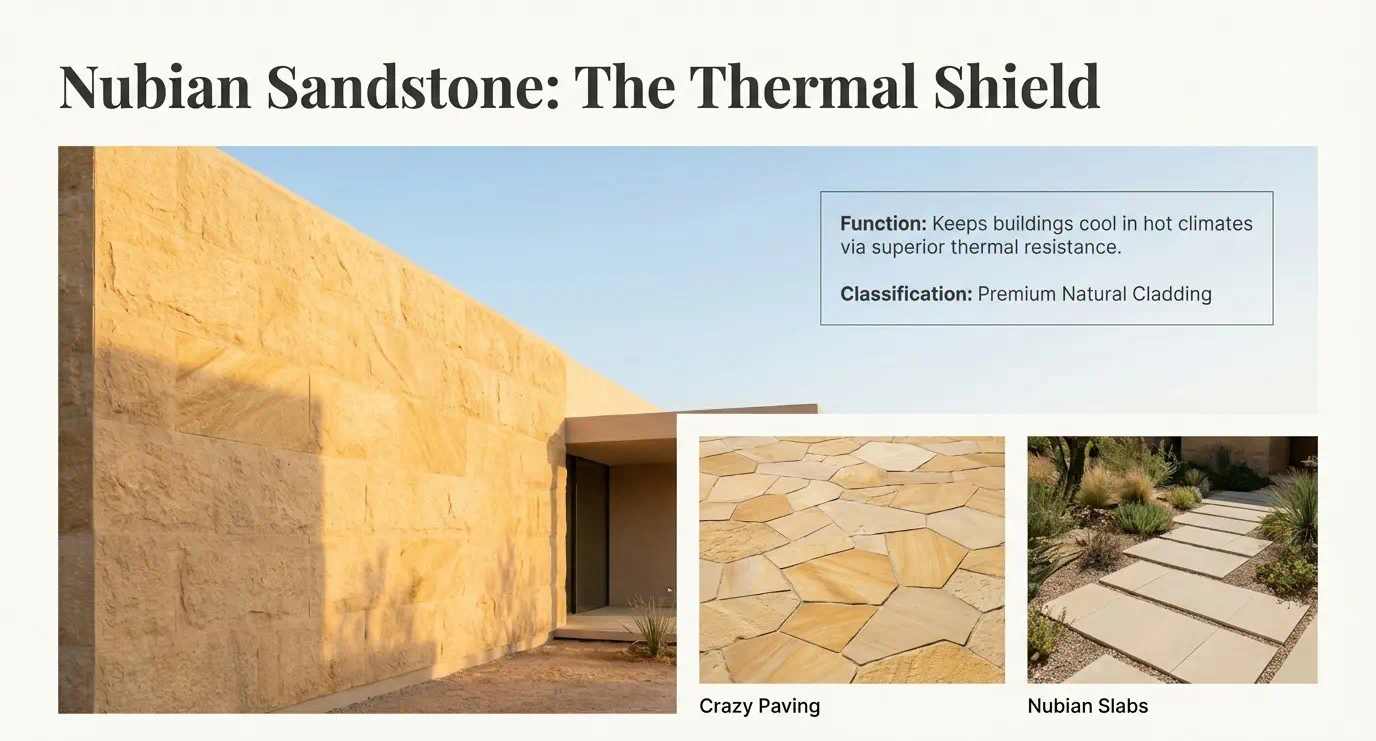
Nubian Sandstone:
is
categorized as a premium natural cladding stone.
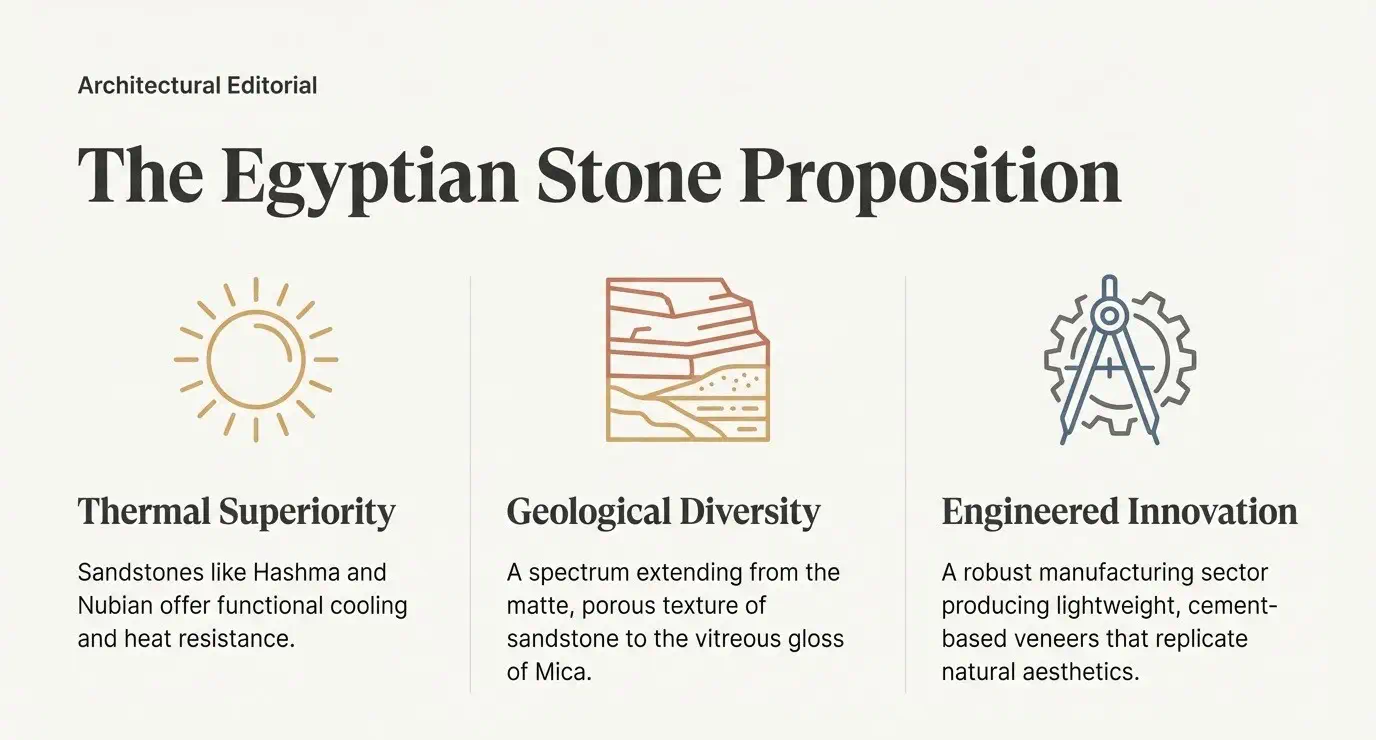
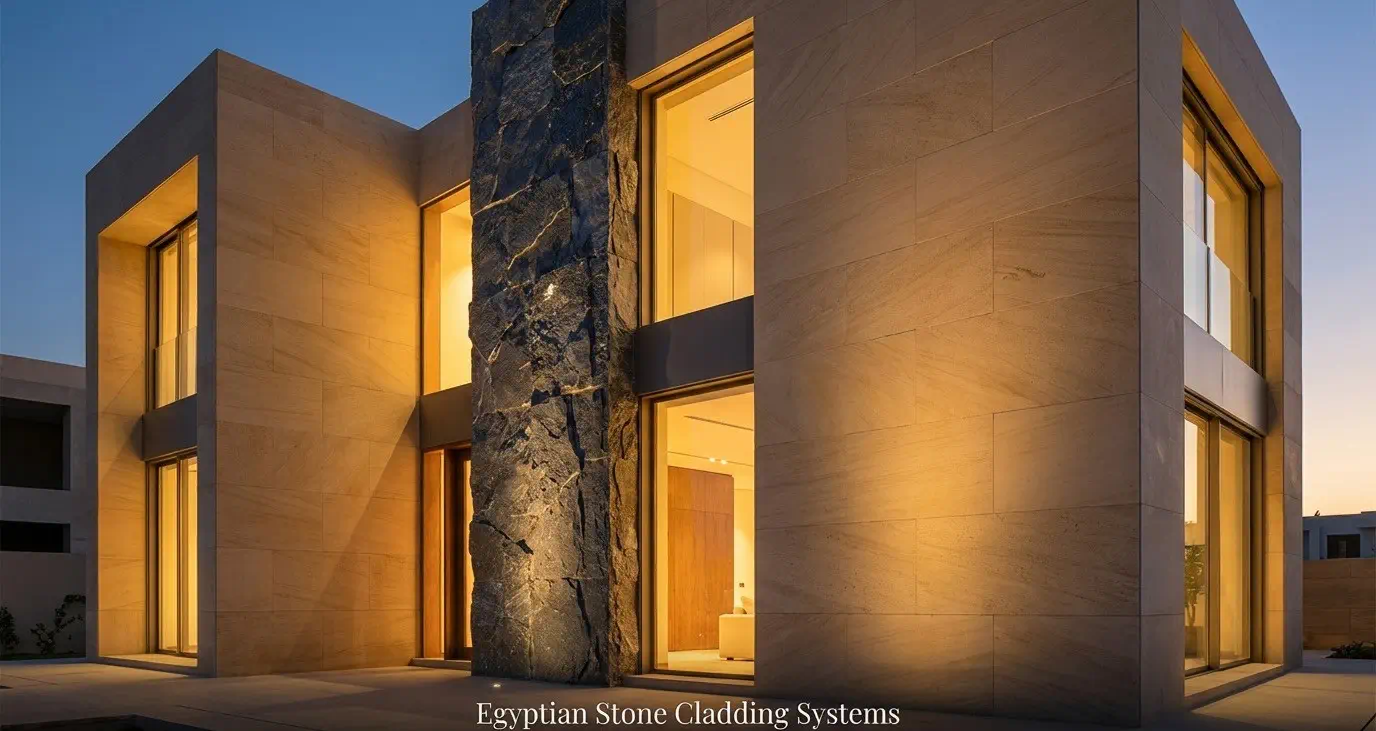
Exterior Cladding: Its thermal resistance
makes it perfect for hot climates. It keeps buildings cool while providing a
"desert-gold" aesthetic.
Landscaping: Used as irregular
paving stones (crazy paving) or "Nubian Slabs" for high-end gardens.
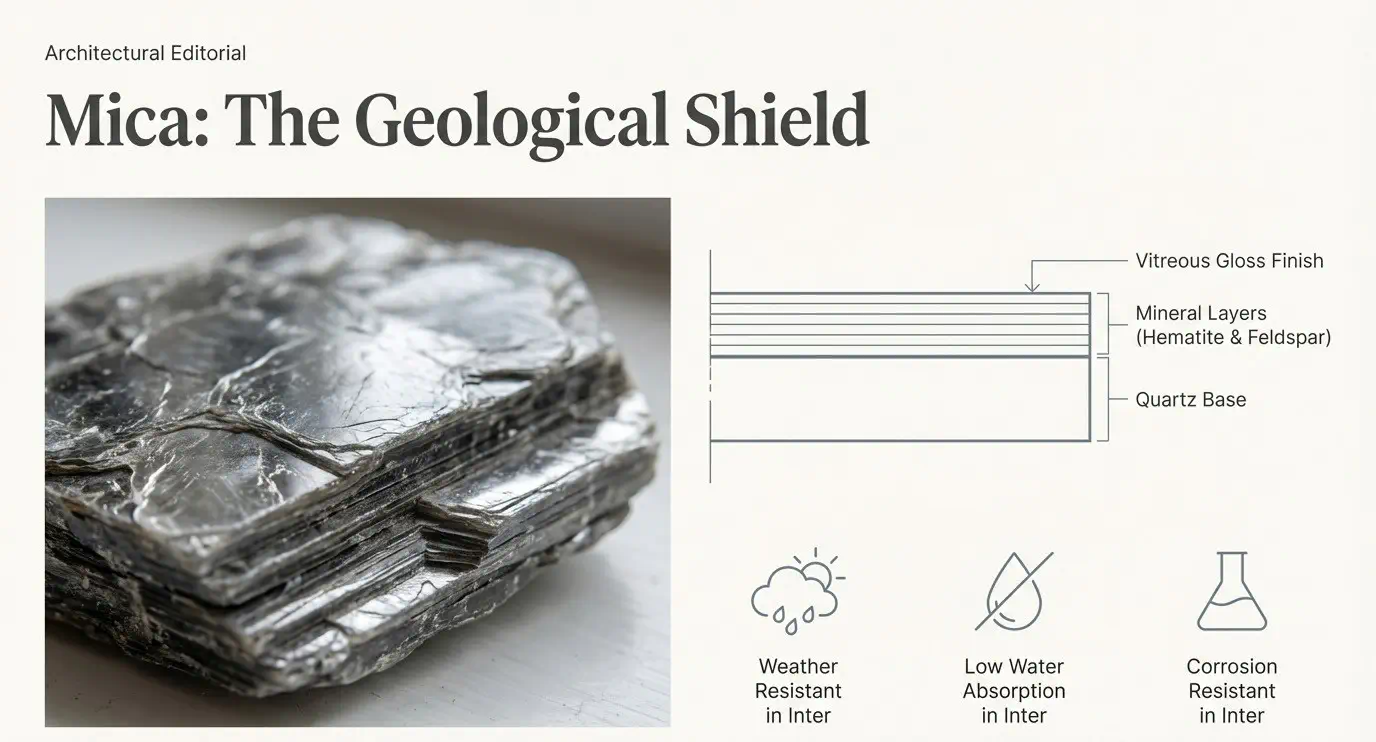
Mica Stone:
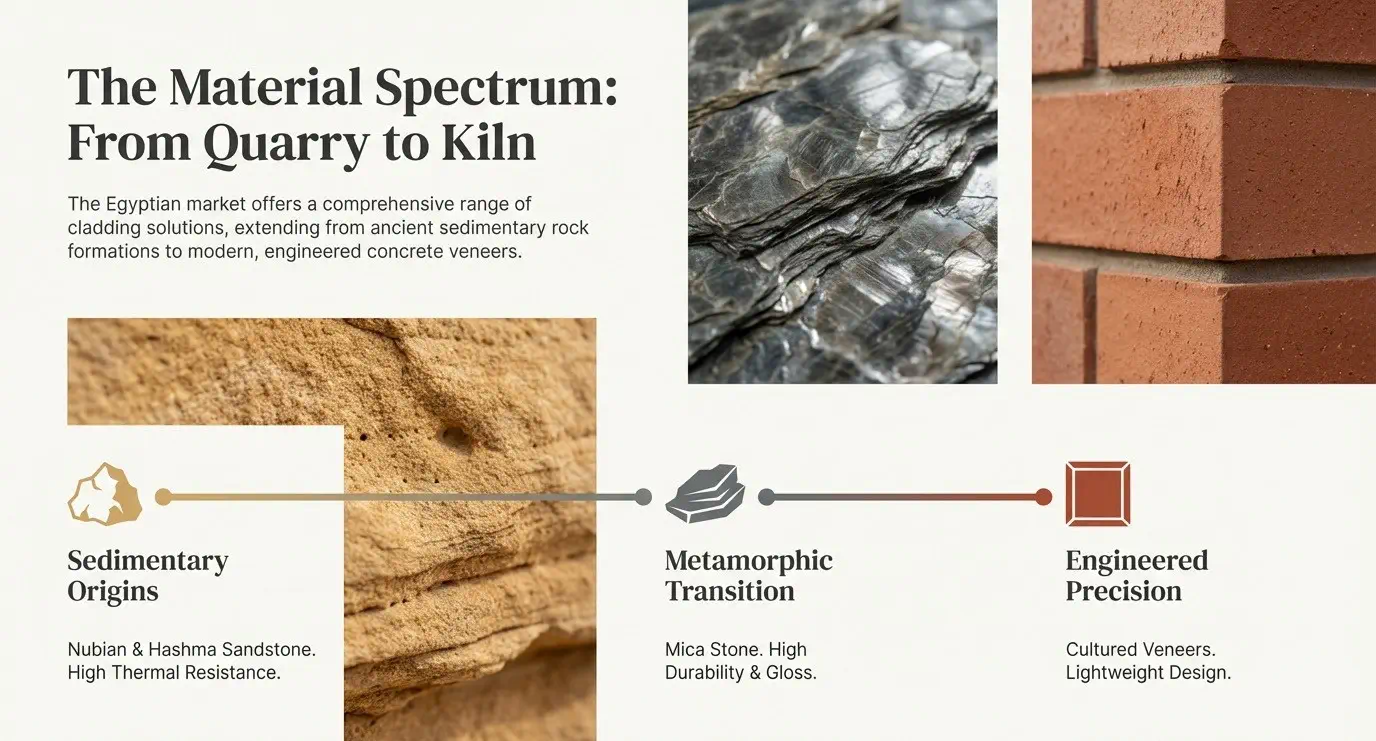
Egyptian Mica is a
durable sedimentary rock composed of quartz and distinct mineral layers (like
hematite and feldspar), which give it a unique, shimmering, vitreous gloss.
Characteristics: It is incredibly tough,
naturally weather-resistant, and corrosion-resistant. It does not easily absorb
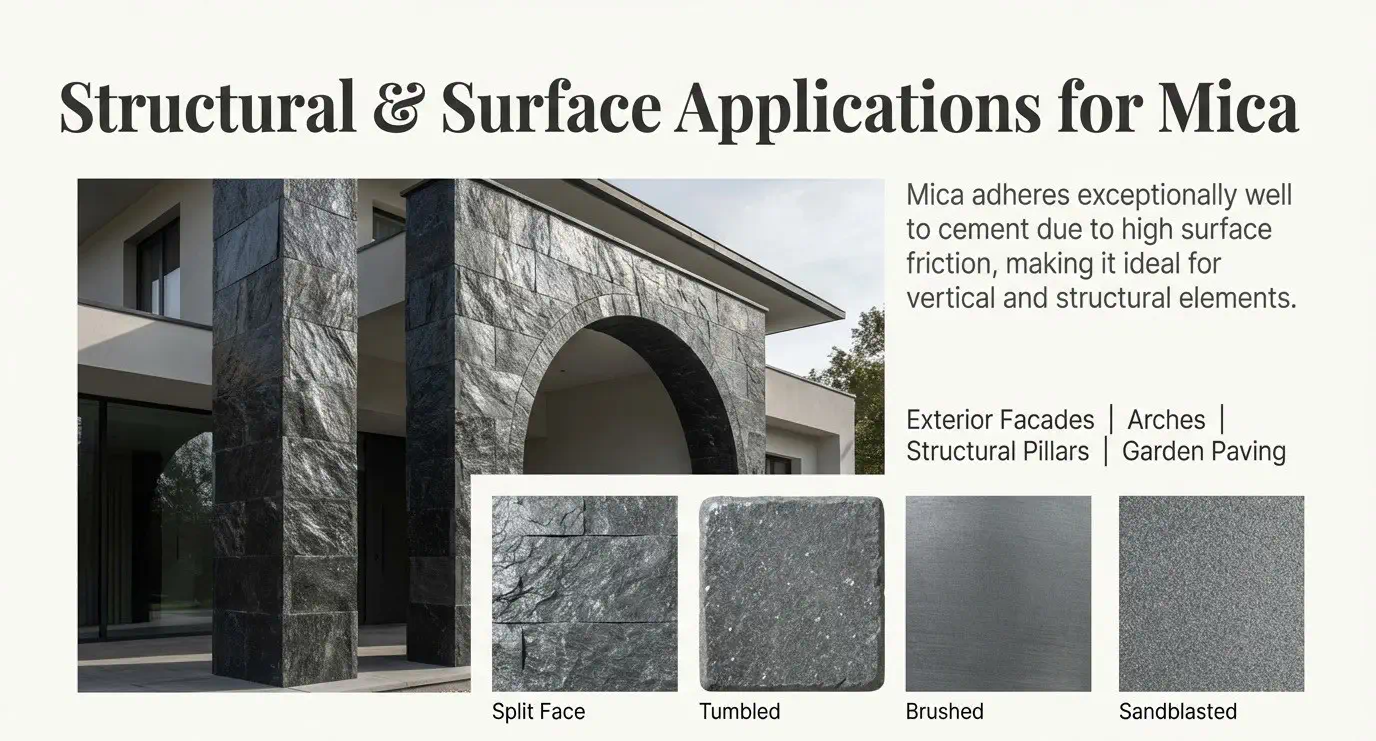
water. Finishes: Split face, tumbled,
brushed, and sandblasted. Applications: Because it binds very well with cement and withstands harsh
weather, it is heavily exported for exterior facades, garden paving slabs,
arches, and structural pillars.
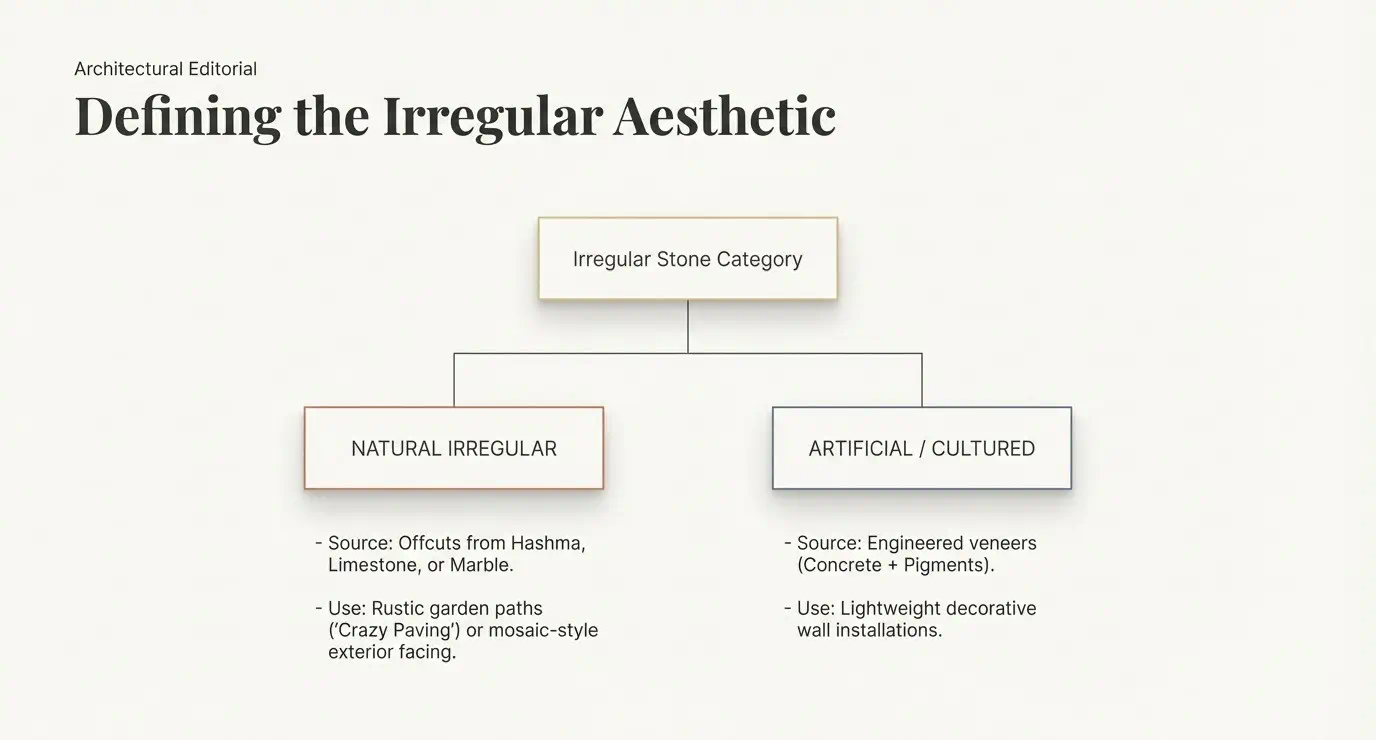
Irregular Stone:
In the Egyptian export
market, "irregular stone" refers to stones cut or left in organic,
non-uniform shapes. This is commonly sold as natural "crazy paving"
or as manufactured stone veneers. Natural Irregular: Often made from Hashma,
Limestone, or Marble offcuts. Used for rustic garden paths or mosaic-style
exterior wall facing.
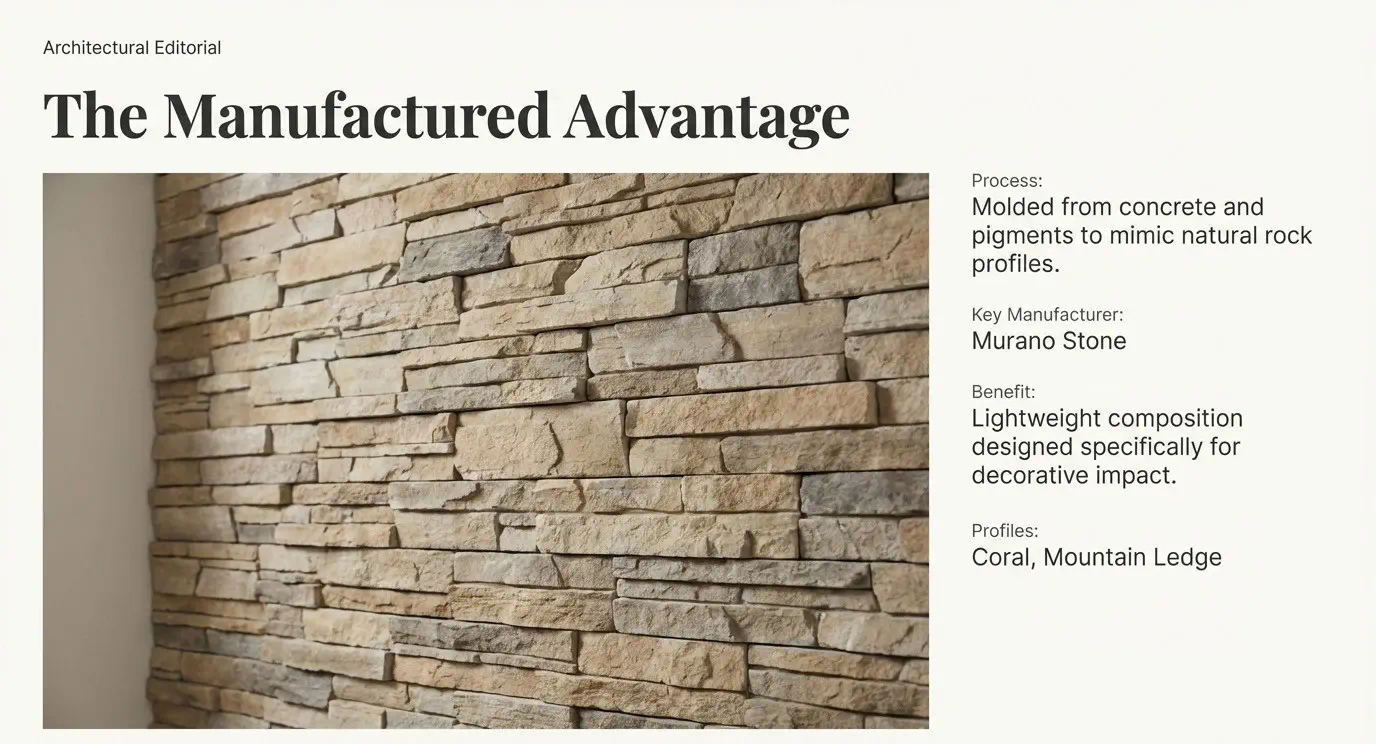
Artificial/Cultured Irregular Veneers: Egyptian manufacturers
(like Murano Stone) produce engineered irregular stones molded from concrete
and pigments to mimic natural rock (e.g., "Coral" or "Mountain
Ledge" profiles). These are lightweight and designed specifically for decorative
wall installations.
Brick & Stone Cladding:
Egypt has a booming
sector for facade cladding, combining its natural stone wealth with modern
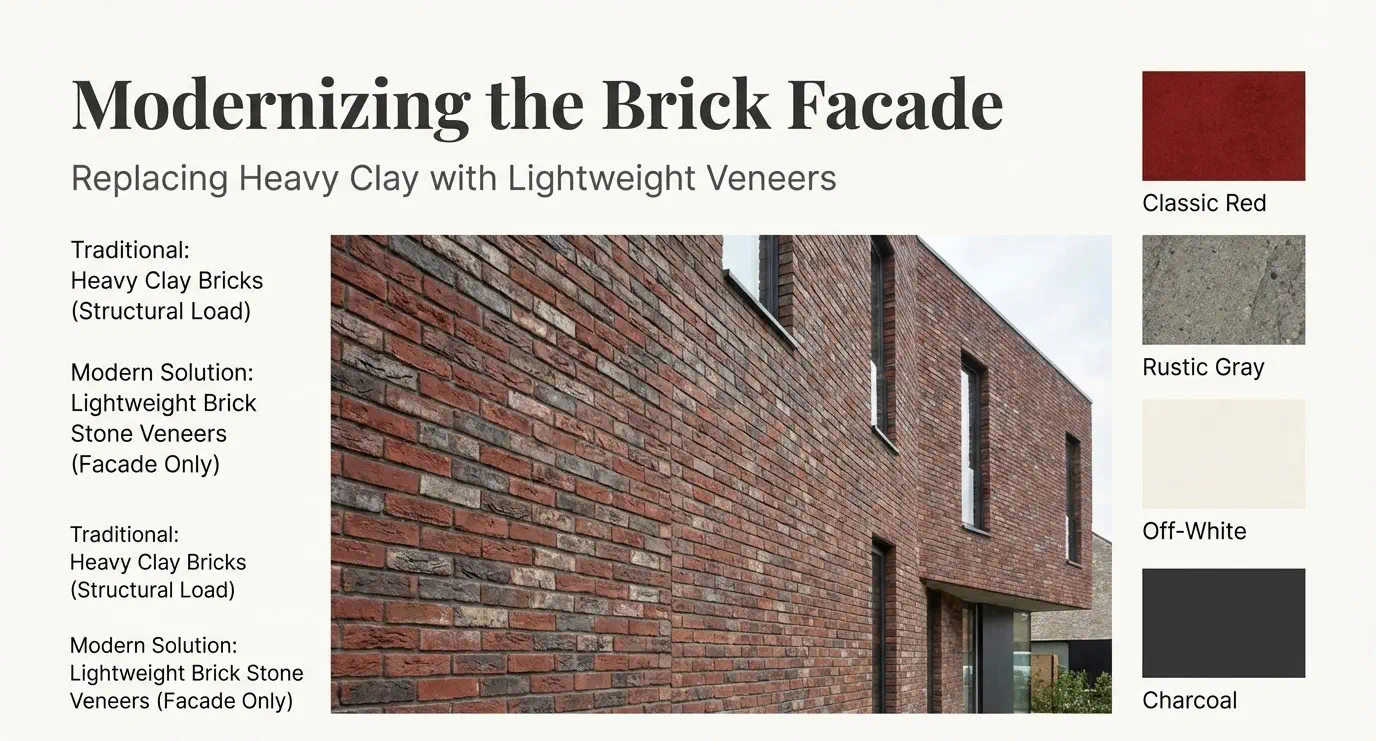
engineering. Cultured/Artificial
Bricks: Instead of traditional heavy clay bricks, Egypt manufactures and exports
lightweight "brick stone" veneers. These replicate the look of
exposed brick walls (available in classic red, rustic Gray, off-white, and
charcoal) and are used for interior accent walls and exterior facades.
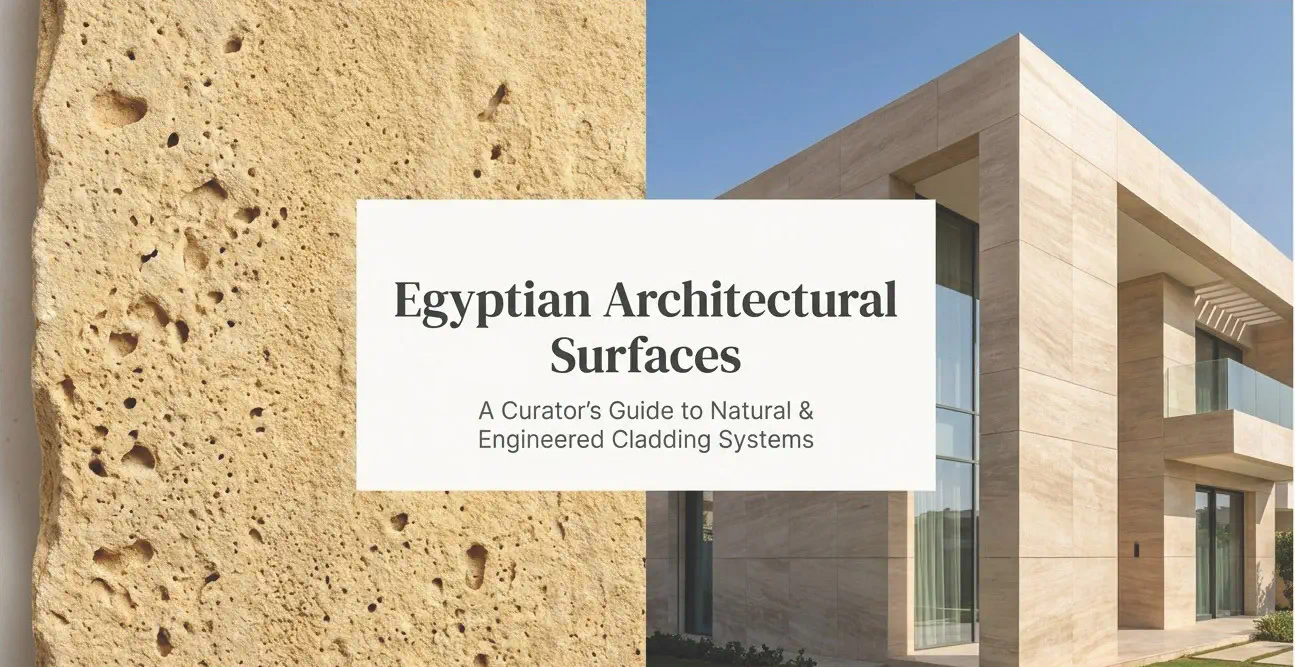
Natural Stone Cladding: Egyptian factories
export pre-cut panels of Hashma, Marble (like Galala or Sinai Pearl), and
Granite specifically for dry-stone mechanical cladding. This involves mounting
the heavy stone slabs to building exteriors using stainless steel or aluminium
brackets.
For more information about catalogues TDS, MSDS ,COA Pls. send an email to requit it