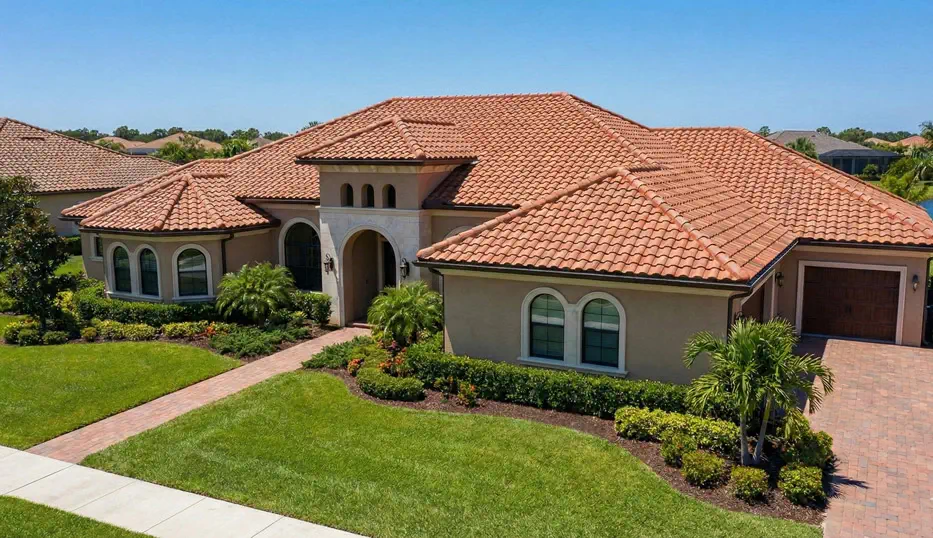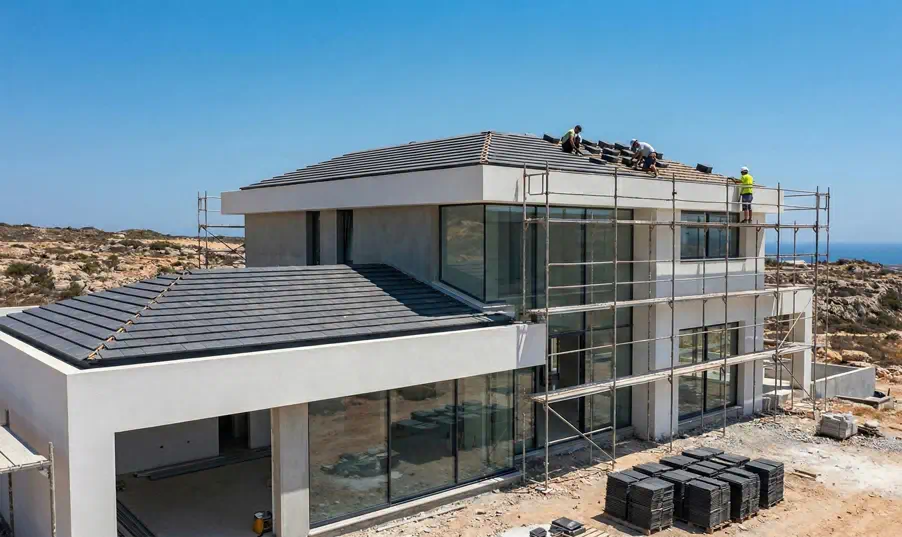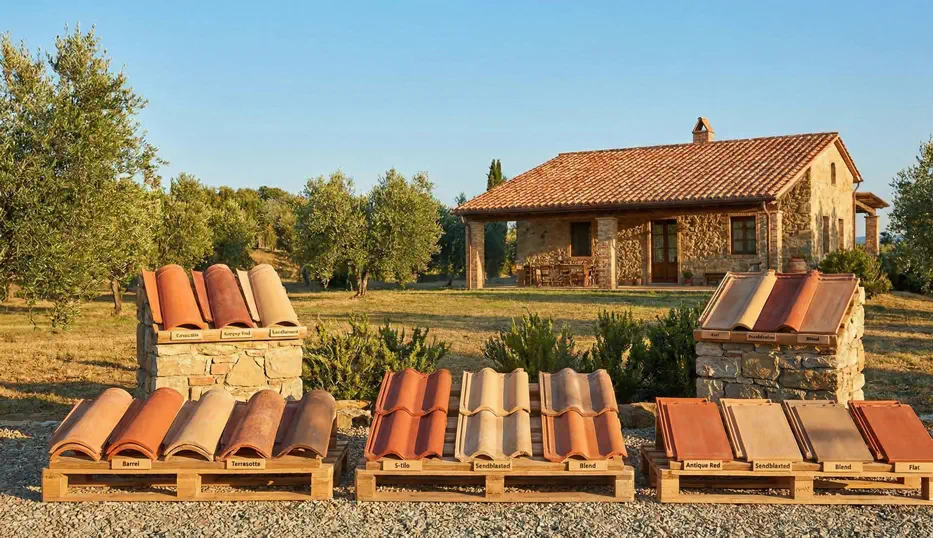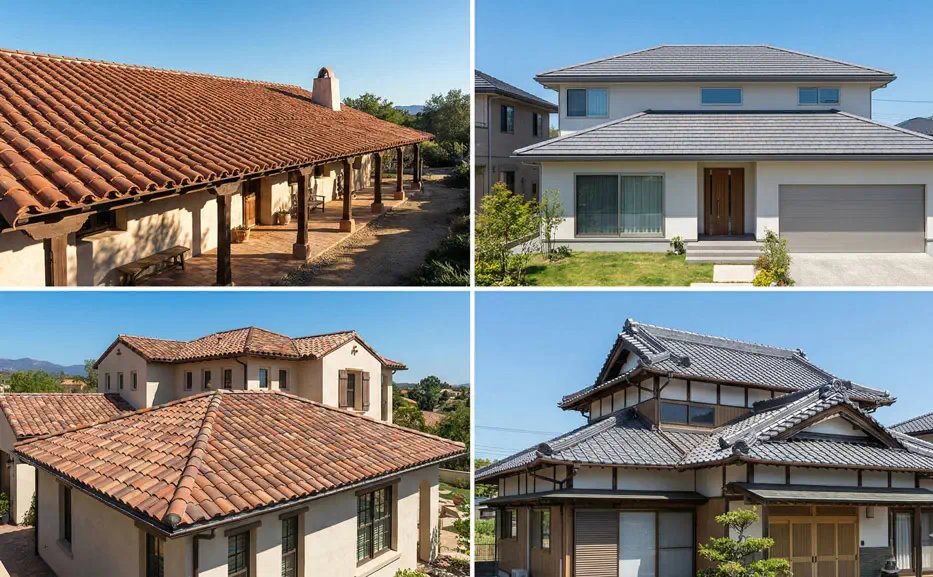
We specialize in a versatile range of profiles that combine
timeless aesthetics with extreme durability:
French
Tiles: Superior water shedding with a classic look.
Roman
Tiles: The perfect "Old World" Mediterranean finish.
Dutch
Tiles: An elegant S-curve profile for a unique texture.
Ridge
Capping: High-durability finishing pieces to ensure a leak-proof peak.
Our clay tiles are built to withstand the elements while
maintaining their color and integrity for decades. We pride ourselves on
consistent supply and competitive pricing for bulk orders.
Clay tiles are primarily composed of natural clay mixed with water and occasionally additives for colour or strength. The manufacturing process involves:
Extrusion or Pressing: The clay is shaped into specific profiles.
Drying: Moisture is removed to prevent cracking.
Firing: Tiles are "baked" in a kiln at temperatures exceeding 1,000°C (1,832°F). This process, known as vitrification, fuses the clay particles together, making the tile hard, dense, and water-resistant.
A "system" refers to more than just the tiles; it involves a layered assembly designed for moisture management and structural integrity:

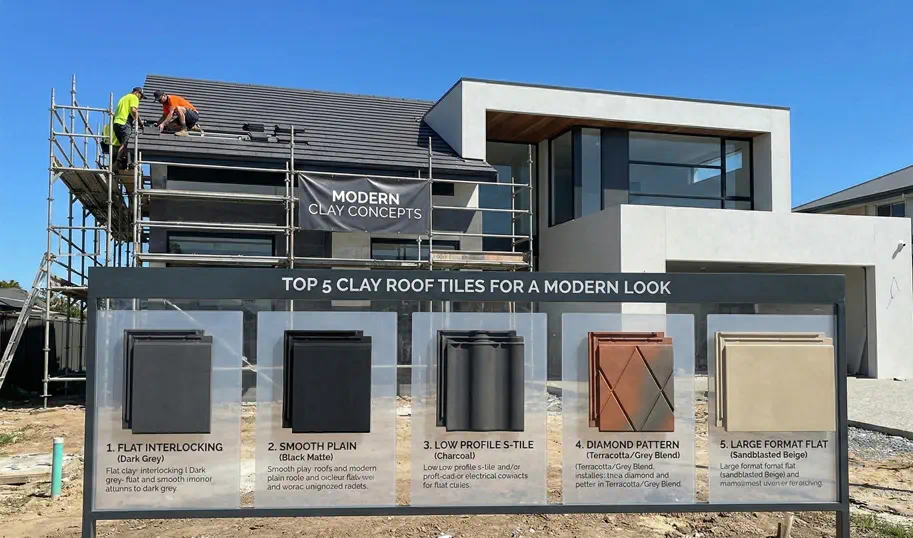
The visual character of a CRTS is defined by its profile:
Mission (S-Tile): The classic "S" shape that mimics the look of traditional barrel tiles but is a single piece for easier installation.
Spanish Tile: High-profile, undulating curves that create distinct shadows.
Flat/French Tile: Provides a cleaner, more contemporary look with interlocking grooves for water management.
Plain/Shingle Tile: Rectangular tiles that overlap like wood or slate shingles.
While CRTS is superior in durability, it requires specific technical considerations:
Weight: Clay tiles are heavy (ranging from 600 to 1,500 lbs per square). The building’s structural frame must be engineered to support this load.
Fragility: While they withstand the elements, they can crack if walked upon incorrectly. Repairing them requires professional expertise.
Cost: The initial investment is significantly higher than asphalt shingles or metal roofing, though the "cost-per-year" over its lifetime is lower.
Slope Requirements: Generally recommended for roofs with a pitch of 4:12 or greater. Lower slopes require specialized double-underlayment systems.
To maximize the lifespan of a clay tile roof, owners should:
Annual Inspections: Check for cracked or slipped tiles.
Debris Removal: Keep valleys and gutters clear to prevent water "damming" under the tiles.
No Pressure Washing: High-pressure water can damage the underlayment or force water into the roof cavity.